

Market Analysis: How China Best IP67 LED Spot Light Companies Are Capturing Share in Europe and the Middle East
Two Markets, Two Sets of Rules: What European and Middle Eastern Buyers Actually Demand
European buyers navigate a tightly regulated procurement environment. CE marking, RoHS compliance, and ERP (Energy-Related Products) directive conformity function as non-negotiable market entry requirements. A product lacking complete certification documentation risks customs delays, contractor liability exposure, or outright disqualification from public tender evaluation. Beyond compliance, European specifiers also prioritize long-term optical performance and minimal maintenance burden — factors that carry significant weight in total cost of ownership calculations.
Middle Eastern markets, particularly across the GCC, present a different set of pressures. Ambient temperatures regularly exceed 45°C. Coastal humidity and fine desert particulates accelerate material degradation. SASO certification has become increasingly relevant for Saudi government procurement. Buyers in this region demand products that sustain rated performance under extreme environmental stress — not just in controlled laboratory conditions.
Despite these regional differences, a shared requirement emerges clearly: consistent long-term reliability with minimal intervention. This convergence has fundamentally reshaped how serious Chinese manufacturers develop and position their outdoor lighting portfolios.
The IP67 Specification as a Market Access Passport — and Why Most Factories Fall Short
IP67 appears frequently in product catalogues, yet the specification carries genuine engineering consequences that many suppliers underestimate. Achieving IP67 on a standardized test bench differs substantially from sustaining it through 50,000 operational hours in real field conditions. Thermal expansion cycles, UV-induced material fatigue, and seasonal moisture variation all stress housing seals and optical assemblies over time.
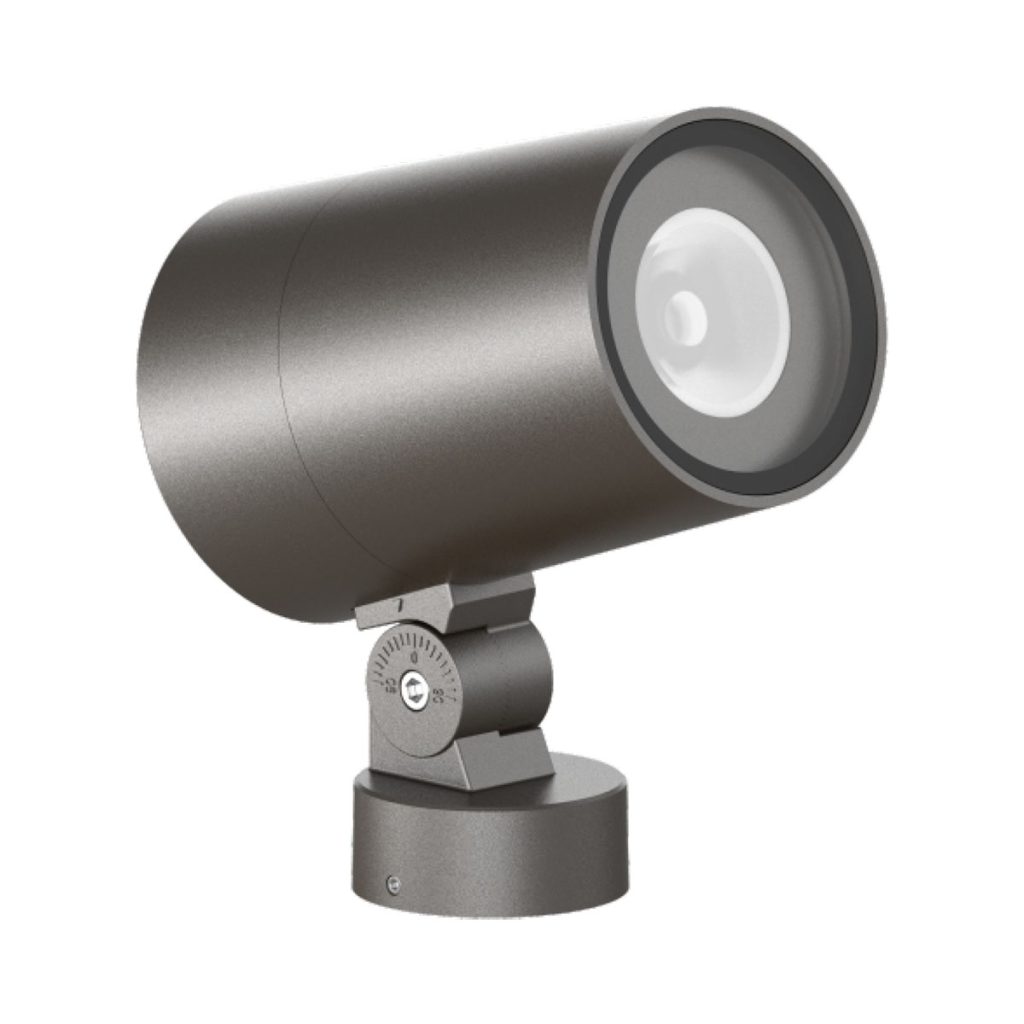
Starslighting (Changzhou Starslighting Technology Co., Ltd.) addresses this engineering challenge directly through its ST-F020 landscape and architectural spot light series, spanning 9W to 120W. The product combines die-cast aluminum housing with tempered glass construction, rated for -20°C to 50°C operating conditions and IK08 impact resistance alongside the IP67 standard. Luminous efficiency ranges from 120 to 150 lm/W. These figures reflect deliberate component selection — LED chips sourced from Lumileds, Cree, and Bridgelux, paired with drivers from Meanwell, Philips, and Inventronics. Consequently, the product withstands scrutiny in real installation environments, not just on specification sheets.
Certification Portfolios as Competitive Moats — CE, SASO, and the Hidden Cost of Non-Compliance
Holding a single CE certificate no longer differentiates a Chinese supplier in competitive project tenders. European specifications increasingly demand CB testing reports, RoHS declarations, and ERP documentation together within the same submission package. Middle Eastern distributors face parallel pressure, as Saudi government projects increasingly require SASO-certified products. Manufacturers that maintain all of these certifications — and can produce complete documentation rapidly during tender evaluation — eliminate a critical friction point in the buyer's decision process.
Changzhou Starslighting Technology Co., Ltd. holds CE, CB, RoHS, ERP, ISO, IEC, and SASO certifications across its product range. This breadth of compliance capability reflects deliberate investment in quality infrastructure. The facility operates in-house integrating sphere testing equipment, a Distribution Photometric Darkroom, aging test chambers, and advanced SMT pick-and-place production lines. For procurement evaluators assessing supplier credibility, verifiable testing infrastructure carries considerably more weight than certification logos alone.
Photometric Flexibility and DMX Control — Why Architects and Landscape Engineers Specify Chinese
Specification-driven procurement — where lighting designers determine the product brief before contractors bid — has historically favored European brands with deep photometric libraries. That dynamic is measurably shifting. Chinese manufacturers now routinely offer beam angle selections from 8° to 60°, single-color and full RGB/RGBW configurations, and DMX512 control compatibility as standard options rather than premium additions.
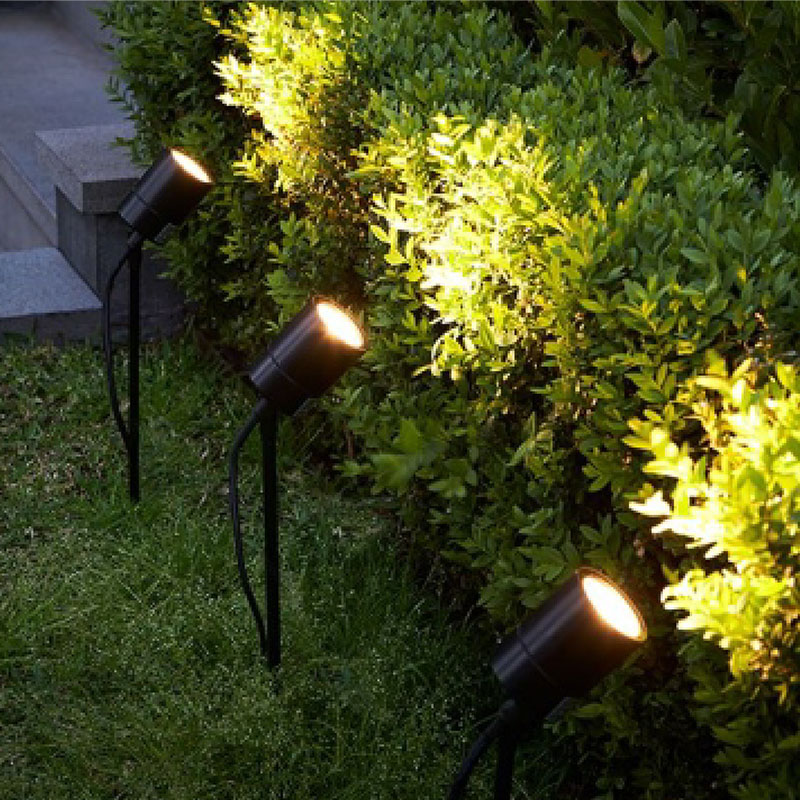
Starslighting's inground LED spot light line covers 3W to 12W at DC24V, targeting compact landscape and courtyard applications. At higher power levels, the ST-F028 facade series spans 24W to 150W and supports four distinct installation configurations: inground, pole-mounted, spike, and base mounting. This flexibility allows a single product family to address park pathway lighting, building facade illumination, and hotel entrance landscaping within the same project scope. As a result, architects managing multi-application projects can consolidate sourcing without sacrificing photometric performance across different installation contexts — a practical advantage that increasingly appears in specification language.
OEM/ODM Capacity and Lead Time as Differentiators in Project-Driven Markets
Large-scale infrastructure projects — whether a coastal promenade development in the UAE or a heritage district revitalization in Eastern Europe — impose strict phased delivery timelines. Supply disruptions in lighting affect downstream installation schedules and, ultimately, project handover dates. This reality elevates production capacity and delivery reliability from secondary to primary supplier selection criteria.
Starslighting operates a 3,800 square meter manufacturing facility with an annual production capacity of 200,000 sets. The technical team, comprising more than five dedicated engineers, supports OEM and ODM customization across optical configuration, driver specification, control system integration, and housing finish options. A separate after-sales team manages quality control and post-delivery technical support. For procurement managers comparing shortlisted suppliers, this combination of manufacturing scale and project-level responsiveness addresses a practical execution risk that smaller or less vertically integrated suppliers frequently cannot resolve.
Evaluating a Chinese IP67 LED Supplier for European and Middle Eastern Projects — A Buyer's Framework
Procurement professionals new to this sourcing category often underestimate the due diligence scope. Beyond certification documentation, a thorough evaluation covers third-party photometric test reports, factory audit readiness, warranty structure, and the guaranteed availability of replacement components throughout the product lifecycle. A five-year warranty backed by a functioning service infrastructure differs substantially from the same commitment offered by a trading intermediary without direct manufacturing control.
Changzhou Starslighting Technology Co., Ltd. has exported products to more than 30 countries since its founding in 2016, with project deployments documented across Romania, Poland, Croatia, and Algeria. This track record across diverse regulatory environments offers a measurable baseline for assessing operational credibility. Buyers who prioritize supply chain transparency, verifiable photometric data, and scalable order quantities will find that the performance gap between Chinese manufacturers and established European brands has narrowed considerably — and in several technical categories, it has closed entirely.
For product specifications, project case studies, and inquiry support, visit https://www.czstarslighting.com/.
Changzhou Starslighting Technology CO.,LTD.
Changzhou Starslighting Technology CO.,LTD.
+ +86 17305192737
info@czstarslighting.com
Visit us on social media:
X
Legal Disclaimer:
EIN Presswire provides this news content "as is" without warranty of any kind. We do not accept any responsibility or liability for the accuracy, content, images, videos, licenses, completeness, legality, or reliability of the information contained in this article. If you have any complaints or copyright issues related to this article, kindly contact the author above.
